
'There will be a series of rate hikes, but the pace and quantum will depend on how the economy in the US and the rest of the world behave.'

The next annual budget of India will have to be very carefully structured to sustain the country's growth momentum, Union Finance Minister Nirmala Sitharaman said on Tuesday, noting that it will also address inflation concerns. Visiting Washington DC to attend the annual meeting of the International Monetary Fund and the World Bank, the finance minister was responding to a question on the next year's Budget at a fire-side chat with eminent economist Eshwar Prasad at the prestigious Brookings Institute. "Specifics (of the next Budget) may be difficult at this stage because it's a bit too early. "But broadly, the growth priorities will be kept absolutely on the top. "Even as I speak about the concerns that inflation brings before me. So, inflation concerns will have to be addressed. "But then how would you manage growth would be the natural question," Sitharaman said.

Normal life was hit in National Democratic Alliance and Left-ruled states on Monday as rail, air and bus services were disrupted during a bandh called against fuel price hike

Benchmark BSE Sensex rose by over 379 points on Tuesday as gains in oil & gas, banking and auto shares helped the barometer continue winning run for the third straight session. The 30-share BSE benchmark index advanced 379.43 points or 0.64 per cent to settle at 59,842.21. During the day, it jumped 460.25 points or 0.77 per cent to 59,923.03. The broader NSE Nifty climbed 127.10 points or 0.72 per cent to 17,825.25 as 42 of its constituents advanced.
Pakistan was ready to buy petroleum products from India if these were offered at "right prices", the country's minister of Petroleum and Natural Resources Asim Hussain said.

India will need to travel back in time and seek inspiration from football greats Tulsidas Balaram and Chuni Goswami to deftly dribble around and sidestep the West-imposed price cap on exports of Russian seaborne crude oil. India depends on imported oil to meet 86 per cent of its needs, of which nearly a quarter now comes from Russia. The copious flows are roughly 10 per cent cheaper than competing suppliers helping India save billions of dollars in fuel costs.
The Air India pilots strike was called off on Tuesday night after the Delhi High Court asked them to join duty within 48 hours and the management to sympathetically consider their grievances.

The government has readied a big legislative agenda for the Monsoon Session of Parliament beginning Monday even as the Opposition is raring to corner the ruling dispensation over a host of issues, including handling of the second wave of COVID-19, rise in fuel prices and farmers' stir.

Petrol and diesel prices on Tuesday touched fresh highs as rupee dipped to a record low of 71.54 against US dollar, making imports costlier
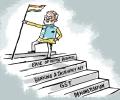
India's GDP expanded 13.5 per cent in the April-June quarter, the quickest pace in a year, to retain the world's fastest growing economy tag but rising interest costs and the looming threat of a recession in major world economies could slow the momentum in the coming quarters.

With rising petrol and diesel prices driving up demand for its CNG vehicles, the country's largest carmaker Maruti Suzuki India plans to widen its CNG portfolio by offering the fuel option in four more models 'very shortly', according to a senior company official. The company, which plans to launch an electric vehicle (EV) in the Indian market by 2025, is also currently keeping a close watch on the country's EV ecosystem "to find out what is the best way of evolution" to be able to offer affordable EVs with hassle free charging infrastructure in order to clock high volumes for a sustainable business.

The rise was due to a sharp fall in prices, which spurred demand.

'With the deployment of a higher degree of mechanisation, awarding contractual mining to MDOs and operational efficiency, we feel confident of achieving the desired target.'

For now, the upside appears to offset damage done to exports by weaker global demand.
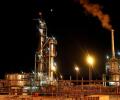
Escalation of the conflict in West Asia between Israel and Iran has had a direct impact on the energy markets, and more broadly on the financial markets as well as the global economy.

Uber on Thursday said it is now showing trip destination to drivers before they decide to accept a ride to enable them to make informed choices as the ride-hailing app announced a host of new measures promising to improve platform experience for drivers as well as riders. Upfront destination feature is already live across 20 cities and will be expanded to all others, Uber said in a statement. The move assumes significance as the government recently warned cab aggregators, including Ola and Uber, of strict action unless they improve their systems and redress mounting consumer complaints.
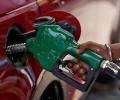
While consumers feel that petrol pinches directly, diesel hurts indirectly, as it is an input in almost all the goods and services we use.

Market leader IndiGo on Friday followed its rivals and raised fares by 25 per cent to offset the impact of rupee fall and spike in international crude prices.

On the exports front, Bajaj is under pressure in Bangladesh and Africa. On the domestic front, it could ride improvement in rural demand and new launches but it also has to cope with competitive intensity and a high base. The management projects 7-8 per cent volume growth in domestic 2W in financial year 2025 (FY25) with moderation in H2FY25 due to a high base Y-o-Y.

Hybrids have helped Maruti acquire leadership in SUVs, a segment that was never its forte. Toyota has also risen with the hybrid tide to clock its highest-ever annual sales in 2023.

Currency depreciation also hits earnings of all domestic carriers

Notwithstanding the recent sharp decline in the stocks of public sector companies, analysts at Jefferies remain bullish on this segment. State Bank of India, Coal India, and NTPC are their top picks in this space, they said in a recent note. The public sector undertaking (PSU) or state-owned enterprise (SOE) index, with a 70-percentage-point outperformance versus the National Stock Exchange Nifty50 over the past 12 months, comes after a decade of underperformance before 2020.

Reliance Industries Ltd on Monday reported a 5 per cent fall in the net profit for the July-September quarter, as weak oil refining and petrochemical business hurt operational performance.
Domestic passenger car sales declined by 23.77 per cent to 1,38,521 units in October, 2011, from 1,81,704 units in the same month last year.
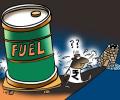
India's climate change goals are turning combustible. On the one hand, a protracted dispute between the government and manufacturers over subsidies threatens to slow the pace of electric vehicle (EV) sales. On the other hand, repeated assertions by different arms of the government over banning sales of new fossil fuel-fired vehicles have queered the pitch for energy investments. Before we address the issue of the recommended diesel vehicle ban in the recent report on energy transition, issued months before the next round of global climate talks begin in Dubai in November, let's look at what's at stake.
State-run gas utility GAIL India on Monday said it should be exempted from payment of fuel subsidies as it does not get any upside from rise in crude oil or natural gas price.

Maruti Suzuki India (MSI) plans to drive in CNG trims across its product range as it remains bullish over long-term prospects of the segment amid increase in fuel prices and drop in diesel car sales, according to a senior company official. The company, which sold around 1.62 lakh CNG cars last fiscal year, is also counting on the rapid expansion of CNG dispensing outlets across the country to bring in more CNG products. Bullish on the expansion of the sales network, the automaker expects its CNG car sales to almost double this fiscal year over 2020-21.

External Affairs Minister S Jaishankar on Wednesday took a critical view of some of the key decisions made by the Jawaharlal Nehru government, and said one needs to get out of this "cult worship" that the period from 1946 onwards was "great years" and the country did "splendidly".
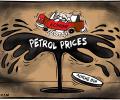
Amid news of a fuel shortage in some parts of the country and wider unrest over fuel issues in the neighbourhood, an analysis of the data from international tracker globalpetrolprices.com shows that the per litre price of petrol is higher in India than in seven out of its nine neighbours.

Every 10 per cent rise in crude oil price will shave off around 0.2 percentage point (pp) from India's GDP growth and widen the current account by 0.3 per cent, says Nomura.
Civil Minister Praful Patel on Monday ruled out retrenchment among employees in public sector Air India and blamed rising fuel prices as the reason behind the present crisis in the aviation sector.
India's import of discounted crude oil from the Russian Federation hit an all-time high in May, with state-run refiner IOC becoming the biggest importer of Russian oil, relegating Reliance Industries to the second place, trade and shipping data show. Indian imports of Russian oil, accounting for over 46 per cent of its total crude oil imports in May, have grown after strong backing by New Delhi, with state-run refiners powering imports of discounted crude. Discounts on Russian oil average around $10 a barrel, said an official from a state-run refiner. IOC's May purchases rose by 64 per cent on the month, and accounted for half of its total crude imports last month, ship tracking data show.
The National Aviation Company of India (NACIL), the entity that came into being after the merger of national carriers Air India and Indian, has increased its working capital limit to around Rs 9,500 crore (Rs 95 billion) in order to meet the recent hikes in fuel prices.

Usually, a fall in oil prices is followed with a cut in retail prices of auto fuels and the government passes on the benefit to consumers. However, Morgan Stanley believes gains this time around will remain capped.

"The 'red bag' belonged to one of the hijackers, it contained explosives, and possibly, real passports, too.

Inflation has reappeared as a global issue in both advanced and emerging economies and India needs to be wary of "imported inflation", especially due to high oil prices, according to the Economic Survey 2021-22 released on Monday. "Inflation has reappeared as a global issue in both advanced and emerging economies. "India's Consumer Price Index inflation stood at 5.6 per cent YoY in December 2021 which is within the targeted tolerance band," the survey report presented in the Parliament by Finance Minister Nirmala Sitharaman noted.
Airlines in India have suffered a staggering loss of Rs 4,000 crore (Rs 40 billion) in 2007-08, and it could double in the current fiscal depending on which way fuel prices are headed, Civil Aviation Secretary Ashok Chawla said.
A swift recovery in oil demand in India is not only helping the stability of the global market, it is giving huge fiscal headroom to the government in terms of additional excise duty.

India's dependence on imported crude oil to meet domestic demand has been a matter of concern for years. Delivering the inaugural address at the global energy summit - Urja Sangam - in 2015, Prime Minister Narendra Modi had called for enhancing domestic oil and gas production to cut the import burden. He aimed at lowering it by at least 10 per cent by 2022 - to coincide with the platinum jubilee of India's independence. But this target is far from being achieved and the country's import reliance has only risen.

The government had last week hiked diesel prices by Rs 5.63 a litre and capped the number of subsidised LPG cylinders to six per family a year.
